David's Desk: The Busyness Trap
Nobody set out to build a culture around busyness. It happened by default.
Deadlines stack up, stakeholders multiply, and in an environment where roles are being cut and budgets questioned, the easiest way to justify your seat at the table is to show you're doing more than anyone else. So the calendar fills up. The output climbs. And we rarely stop to ask whether any of it is actually working.
Years ago, Tim Ferriss laid out a core truth in The 4-Hour Workweek that stuck with me: Being busy is a form of laziness. It’s easy to hide behind a packed calendar and feel productive. But real efficiency isn't about fitting more tasks into your day; it’s about ruthlessly eliminating the work that doesn't matter so you have room for the work that does.
It happens like this, you find something that works, so you add another thing. Then another. Before long, you're running a dozen initiatives at once, none of them getting the focus they need to actually perform. You never remove anything. You just add.
The teams pulling ahead aren't simply the ones doing more, they're the ones who've gotten honest about what's earning its place and cut the rest. That's what we're getting into in this month’s Scaler Spark, not just why reflection works, but how to actually use it to clear the calendar clutter and start filling it with what moves the needle.
Science of Insight: The 23% Edge
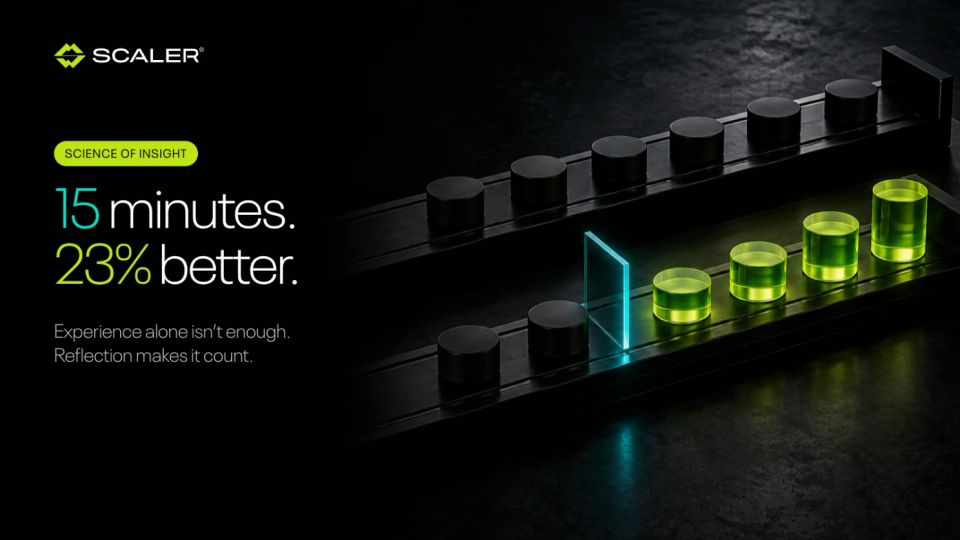
Most teams assume the path to better results is more execution. Harvard Business School researchers decided to test that assumption, and the findings are hard to ignore.
Two groups. One spent 100% of their time executing. The other reserved 15 minutes at the end of each day to reflect on what they'd learned. After just 10 days, the reflection group outperformed the execution-only group by 23%.
Without those 15 minutes, what fills the gap isn't better work, it's more work. More campaigns, more content, more meetings added to an already full schedule, none of it examined or questioned. Reflection is what creates the space to ask whether what you're doing is actually working. Without it, you're not building intuition. You're just repeating the same mistakes at higher volume and calling it productivity.
Fifteen minutes. Twenty-three percent. The math is hard to argue with.
Guest Voice: Ann Handley
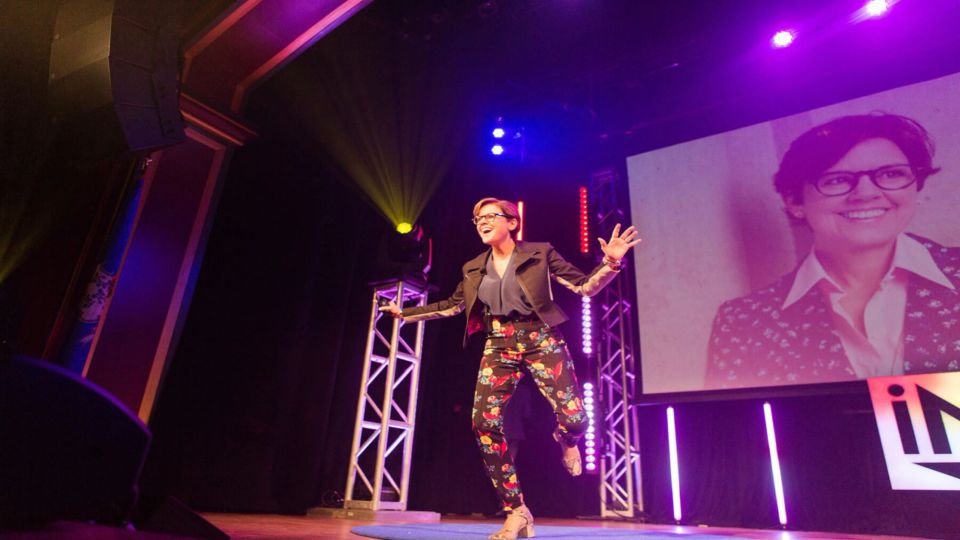
Ann Handley has built a career at the intersection of sharp thinking and sharp writing. She’s a Wall Street Journal bestselling author, digital marketing pioneer, and one of the clearest voices on what it takes to produce work that makes an impact.
We asked Ann how she protects her thinking in a world designed to suppress it.
Her answer was simpler than expected.
"Writing longhand every morning with a notebook and pencil before I open the chaos that is my phone or inbox or any of it... It's no more than 10 or 15 minutes. But it's a small reset that has made me more in tune with my life and creatively primed for anything."
She applies the same principle to ideas, letting them breathe before acting on them.
"It's only when I step away and give an idea time to aerate that I have the perspective to assess whether this idea is worth pursuing or not. Sometimes giving yourself some space from an idea is the only way to know."
Ann's upcoming book, ASAP: As Slow As Possible (Penguin Random House, publish date April 27, 2027), makes the case that strategic patience isn't a weakness. It's how impactful work gets built.
Her advice for teams caught in the execution spiral?"Keep a daily diary. It's a game-changer."
Team Spotlight: Kayleigh, Client Success Manager

Most client relationships don't break because of big failures. They erode quietly, through small misalignments that nobody stopped to catch.
A big part of Kayleigh Sengupta’s role as Client Success Manager is being the bridge between the client and the team. She keeps communication open, makes sure everyone has the full picture, and stays close enough to each account to spot potential issues before they become bigger problems. For Kayleigh, great client success means staying ahead of the curve, flagging things early, and being willing to have honest conversations when something needs attention. It’s about making sure clients feel heard, the team stays aligned, and every project keeps moving in the right direction.
“I never want a client to feel like they have to chase for an update or wonder what’s happening behind the scenes. For me, great client success is about making the whole experience feel clear, connected and genuinely collaborative”.
Webflow Conference 2026: More Speed, Higher Stakes
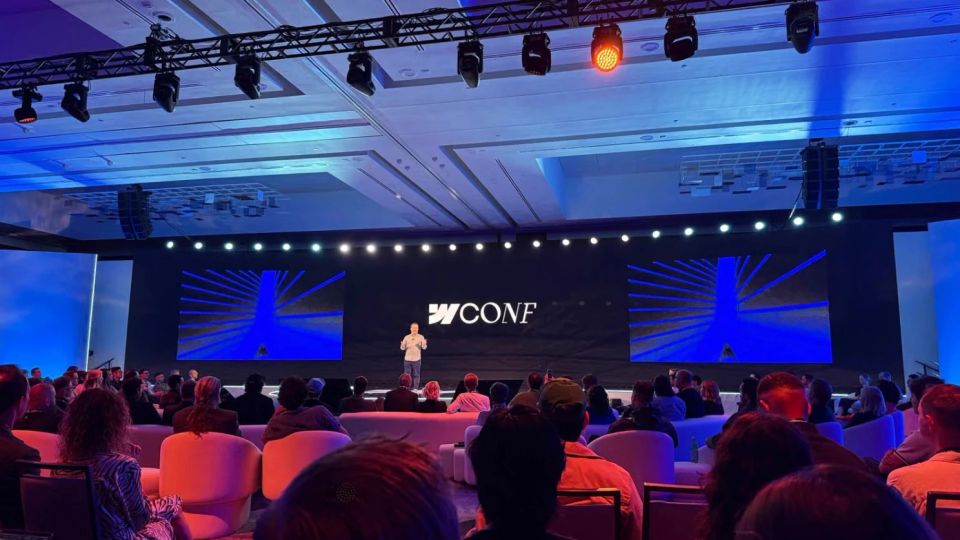
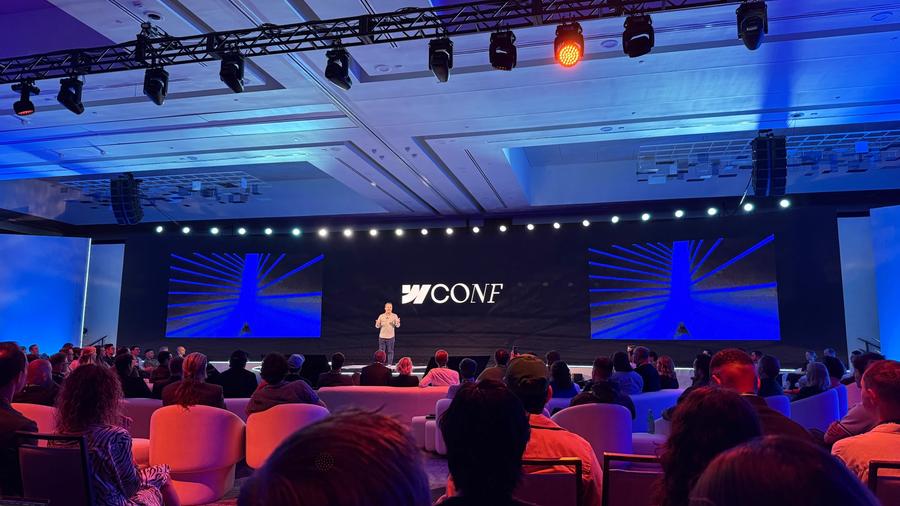
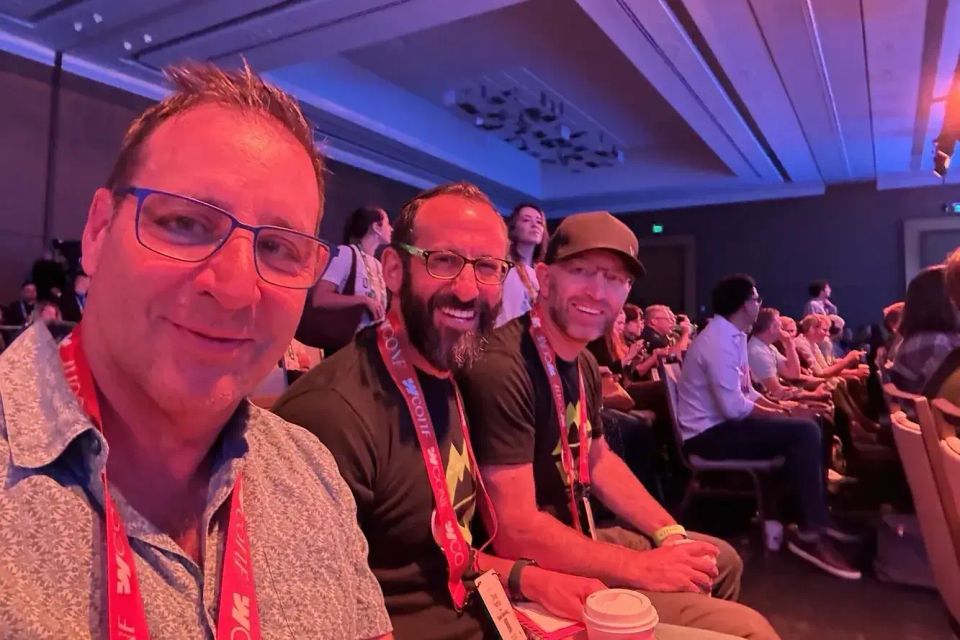
In early September, three members of our team attended Webflow Conf 2026 in Boston. Here's our honest read on what we saw.
Webflow is moving fast on AI, and it shows. The biggest additions weren't small updates. They were a signal that Webflow no longer sees itself as just a website platform. They're going after the entire marketing pipeline:
- Campaigns: design, A/B testing, and launch in one place
- Assets: a full creative system for building on-brand content at scale
- Source: expanded tools for how teams connect and distribute across channels
This could be a brilliant evolution of what made Webflow great, taking complex functionality and making it accessible to everyone, now at scale. Or it could be a move away from the focused simplicity that made them so popular in the first place. Only time will tell.
What we do know is that creating has never been easier. What used to take two weeks of back-and-forth can now happen the same afternoon you have the idea. That's the opportunity… and the trap. When execution is no longer the bottleneck, the natural instinct is to just create more. But more without intention isn't momentum. It's noise.
The tools are there. The reflection is still on you.
You can see our full thoughts and reactions in our latest blog titled: Webflow Conf 2026: Scaler’s Take on Source, Campaigns, AEO, and What Comes Next
The Move: Three Questions Worth Stopping For
Sit down with your team this week and answer these three honestly:
- What are we executing purely out of habit? Name the channel, campaign, or recurring meeting nobody has questioned in months, or even years.
- What are we pretending is working? Call out the specific thing that isn't pulling its weight so you can cut it and put those resources somewhere they'll actually land.
- What idea needs more time before we touch it? Step away from Slack, grab a notebook, and give your best thinking room to breathe before you rush it into production.
Momentum isn't built by doing more. It's built by doing less, with more conviction about what actually deserves to be on the list.
Ready to look at what's really driving your results? Book a call with David here.