
David’s Desk: Who Are You, Really?
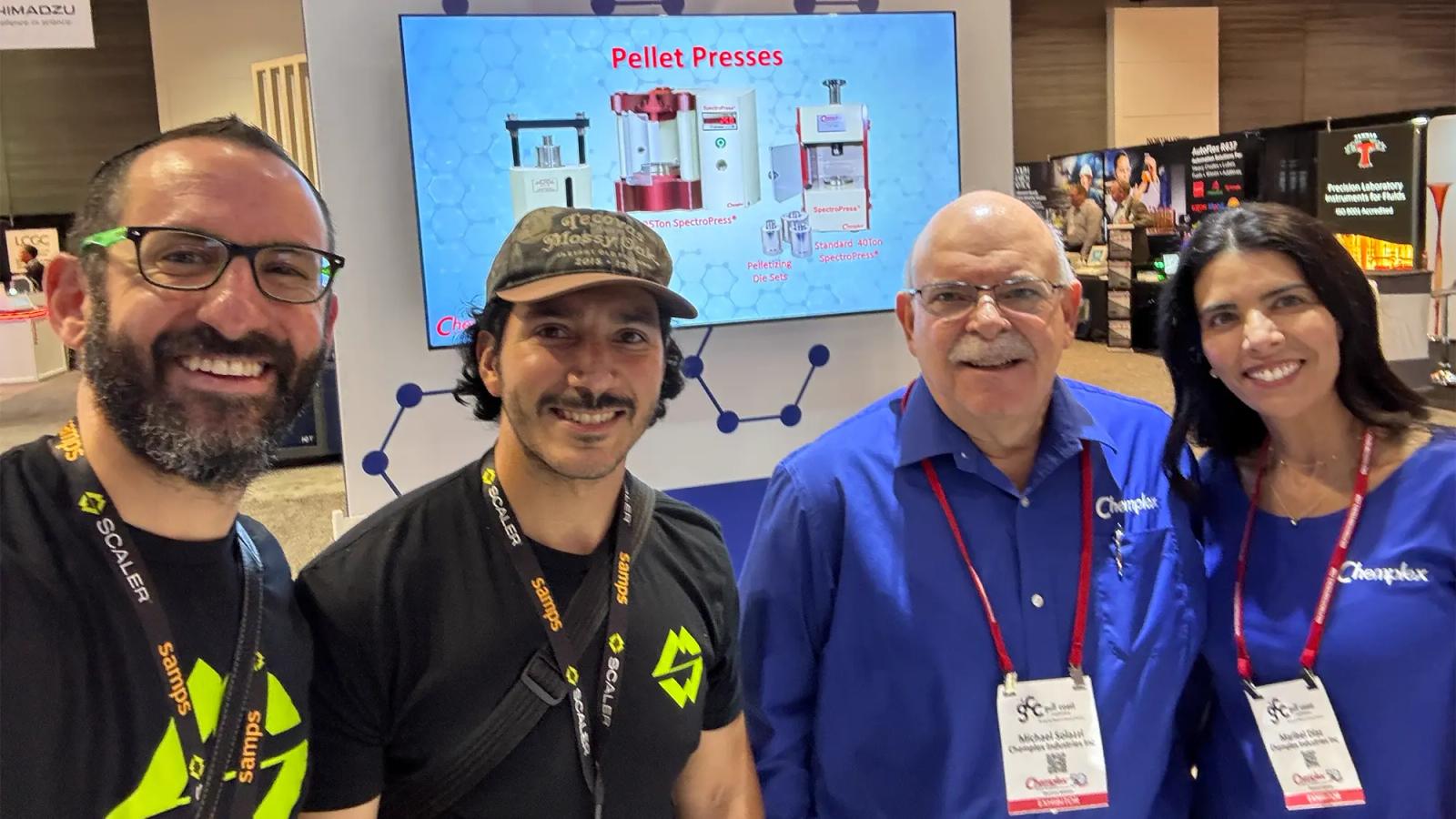
A friend and I used to run a little experiment in bars in Costa Rica (photo from the archives below).
We’d have ridiculously enthusiastic conversations, sometimes literally about the experiment itself. People would start moving closer, curious about what we were talking about.
The funny thing is, we weren’t pretending to have fun. We actually were.

I think that’s the difference. People can feel when you’re genuinely enjoying yourself. You don’t have to convince them to be interested; they get curious on their own.
Companies can lose that same energy. They focus so much on competitors and what their audience wants to hear that they lose sight of what makes them themselves.
At Scaler, we’ve spent the past 9.5 years growing from a one-person agency into a team of 14. As we grow, we’re asking how to build an identity that reflects who we are today, not just who started the company.
It’s the same question we help our clients answer through their branding, messaging, and websites: what makes you different, and how do you make people feel it?
Knowing your audience matters. But knowing yourself matters, too. Being a company people want to work with isn’t just about doing great work. It’s about the energy you bring to it and how people feel when they work with you.
Science of Insight: Good Energy Is Contagious
One guy starts dancing. Nobody else is doing much. Then a second person joins. Then another. Before long, a whole crowd is dancing.
If you’ve seen our recent viral post on LinkedIn, (or on another corner of the internet,) you know the one. It’s hard not to smile watching it unfold.
But what makes it so good? The first guy isn’t waiting for permission. He’s not checking whether anyone thinks he looks ridiculous. He doesn’t need to persuade anyone to join in. The energy does that for him.
There’s an interesting parallel in the world of business. A study published in the Journal of Consumer Behaviour explored how perceived brand authenticity influences consumer choice. Across three studies, researchers found that people chose brands they perceived as authentic more often than chance would predict. One explanation? When a brand feels genuine, people may infer that the people behind it are dedicated to what they do, and expect better quality as a result.
That doesn’t mean being yourself guarantees new business. But it does suggest that people respond to more than what a company sells. They’re also forming impressions of the people behind it: what they care about, whether they believe in their work, and whether this is a company they want to engage with.
You don’t need everyone to dance to the same beat, but you do need to be clear about who you are and create something the right people genuinely want to be part of.
Guest Voice: Anthony Pierri

We had the chance to chat recently with Anthony Pierri, Cofounder of FletchPMM, who has seen firsthand what happens when a company’s positioning isn’t clear.
In an earlier sales role, he talked about how he had spent almost a year unable to bring in new business. He thought he’d failed at sales, but he later realized the agency he was trying to sell for was selling custom services without focusing on a specific market segment.
As Anthony put it: “The core reason I couldn't sell was actually a company positioning problem.”
This realization led him to start his own consultancy with much clearer positioning, and he went on to close millions of dollars in business.
Same skills. Different positioning.
Anthony has carried that willingness to challenge conventional wisdom into other parts of his business. When people said long-form video didn’t work on LinkedIn, he spent two weeks creating a highly edited educational video. According to his account, it earned 33,330 impressions, 277 comments, and multiple new clients.
He also tested a consultancy homepage modeled on an Amazon product page, including fixed pricing, to make buying consulting services feel more straightforward.
Different experiments, same instinct: start with what you believe will represent you best, rather than simply following the usual playbook.
His advice for companies is simple: “Figure out who you are, and then make it abundantly clear in everything you do.”
Team Spotlight: David Nathan, CEO

As Scaler has grown, so has the question of what the company should be known for. For David, the answer increasingly comes down to the people who make it what it is today.
“I want Scaler to be known for the amazing people on its team and the talents and abilities that they bring to the table. Not known for who I am and the fact that I simply started the company.”
That means building an environment where people have an important role to play, feel heard, and have room to shine in what they do best. A place where both team members and clients feel at home, and where growth means more than just getting bigger.
Growth has been part of Scaler’s identity from the beginning: personal growth, company growth, helping clients grow, and doing work we’re genuinely proud of. David wants that to remain at the heart of the company as more people shape what Scaler becomes.
The goal isn’t to make everyone the same. It’s to build something people believe in, contribute to, and feel proud to be part of.
“I login to work every single day honored and genuinely excited to be working with amazing people doing exceptional things, and constantly pushing themselves out of their own comfort zones. That’s what Scaler means to me, and that’s the energy I want to put out into the world.”
Client Spotlight: TrueCourse Biosciences
Bringing two companies together is one thing. Figuring out what makes them stronger together, without losing what made them great in the first place, is another.
When NanoImaging Services and Proteos came together as TrueCourse Biosciences, they needed one clear identity that brought their capabilities together without losing the expertise and credibility of either brand.
The challenge was connecting protein production, cryo-EM, and nanoparticle services under one story without watering down the science. “Characterization” didn’t quite capture the depth of their structural biology work. “Therapeutic Intelligence” connected their capabilities to the decisions they help enable in drug discovery.
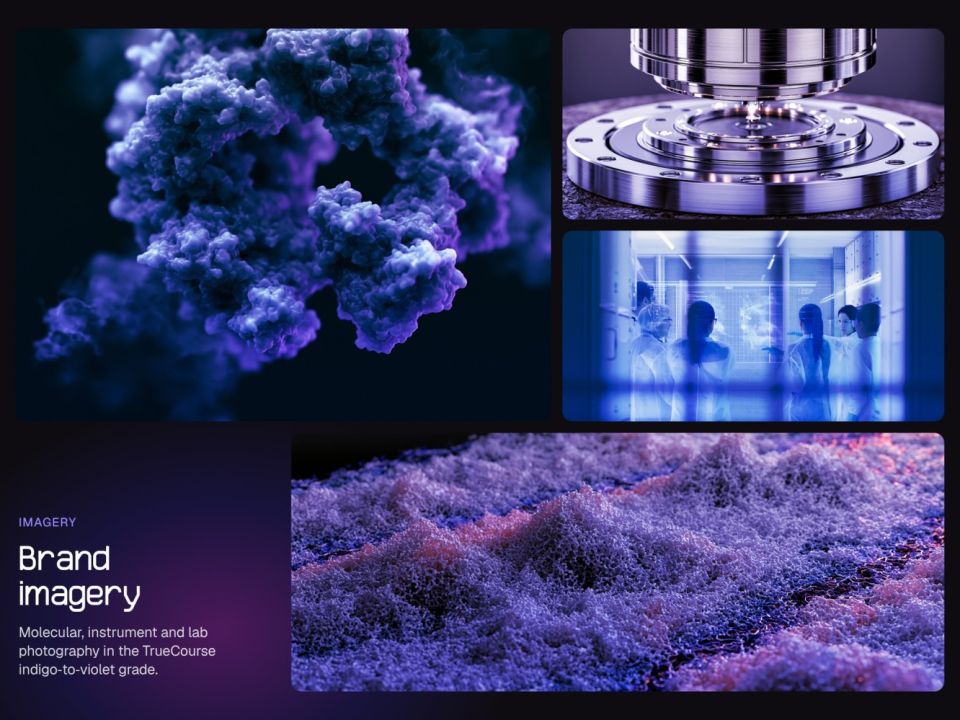
We carried that thinking into the visual identity, moving beyond biotech’s familiar blue palettes and generic service icons with custom typography, animation, and visuals rooted in their science.
The result: a cohesive, forward-looking brand and website grounded in competence, sincerity, and scientific expertise.
Here’s what Kristin Rider, CCO of TrueCourse, had to say about the process:
“We worked with Scaler to build us a new website, as well as help with a rebrand- we absolutely adore our new logo and website and we can’t recommend them highly enough. They came in on budget and on time!”
A strong identity isn’t about looking different for the sake of it. It’s about knowing what makes you different and finding a clear way to show it.
The Move: Audit Your Company’s Identity
Take a look at your company’s website, LinkedIn, and sales materials. Ask yourself:
- Does this sound like us? Or just like any other company in our industry?
- What are we saying because we believe it? And what are we saying because that’s what we think people want to hear?
- What would we stop doing if we weren’t trying to appeal to everyone?
- What would we start doing if we allowed ourselves to be authentically ourselves?
- What does it actually feel like to work with us? Does our brand capture that?
Ask a few people across your team to answer independently, then compare notes. Where their answers differ may be just as revealing as where they agree.
You don’t need to invent a new identity. You need to get clear on who you are, what makes you different, and what you want people to experience when they work with you.
Because the goal isn’t just to get noticed. It’s to give people a reason to want to be part of what you’re building.
And that starts with being genuinely yourself.
If your brand isn’t capturing what makes your company worth being part of, it might be time to rethink the story. Book a call with David.