At this year's SLAS International Conference in Boston, we had a hypothesis we wanted to test.
Everyone says their website matters. But do they actually trust it?
So we surveyed over 100 scientific leaders, sales directors, marketing leads, executives, and technical founders, to find out how they really feel about their websites.
The results revealed a surprising disconnect.
The 50-Point Confidence Gap
Here's what we found:
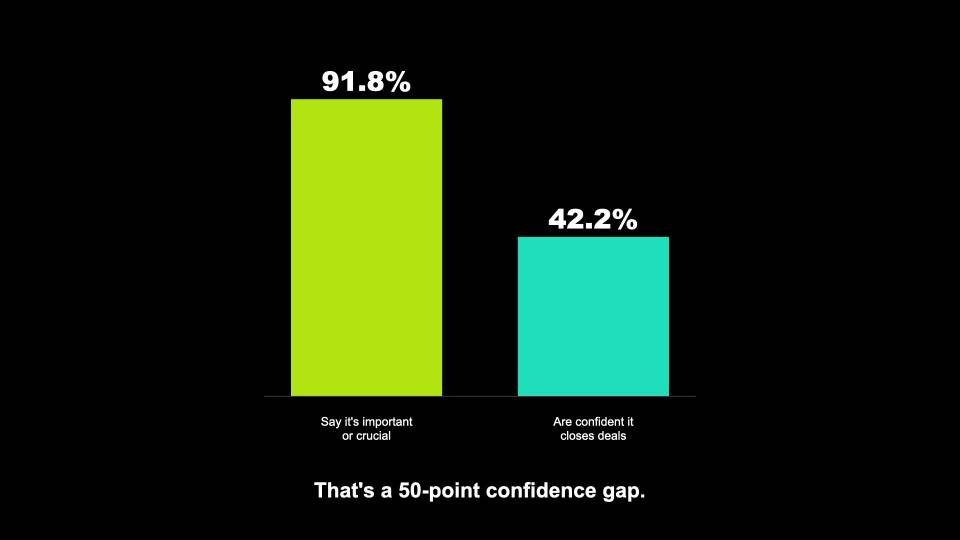
→ 91.8% of respondents said their website is important or crucial for their company's growth.
→ But only 42.2% said they're very confident it actually helps close deals.
That's a 50-point gap between knowing something matters and trusting it to perform.
Nearly everyone agrees their website is critical. Less than half believe it's doing its job.
Websites Are Revenue Tools Now
One thing the data made clear: the era of the "digital brochure" is over.
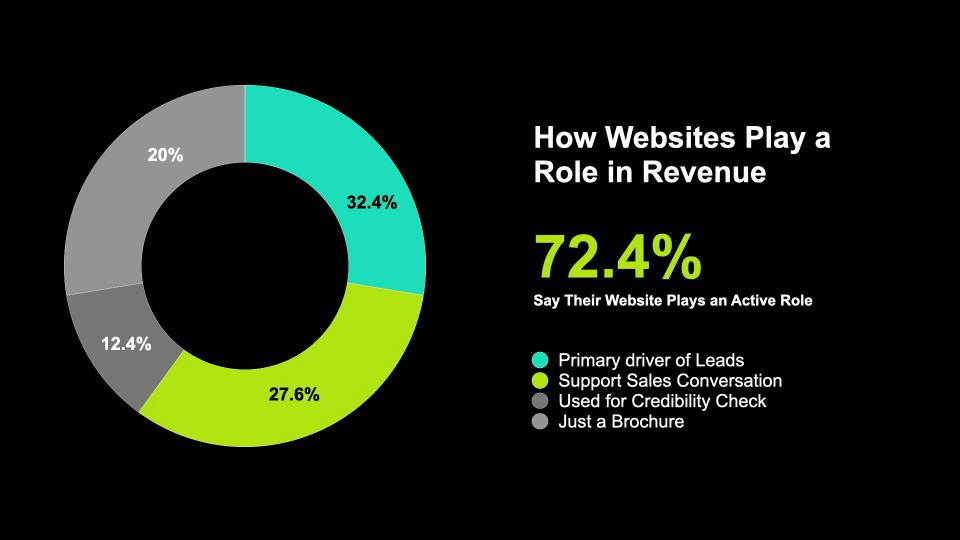
72.4% of respondents said their website plays an active role in revenue—not just as a nice-to-have, but as a working part of how they sell.
Here's how they broke it down:
- 27.6% said it's a primary driver of inbound leads
- 32.4% said it supports sales conversations
- 12.4% said prospects use it as a credibility check before engaging
Only 20% still see their website as "just a brochure."
For most scientific companies, the website is now part of the sales team—whether they've designed it that way or not. The question is whether it's pulling its weight or quietly costing you deals.
The #1 Thing People Want to Fix (It's Not Only Design)
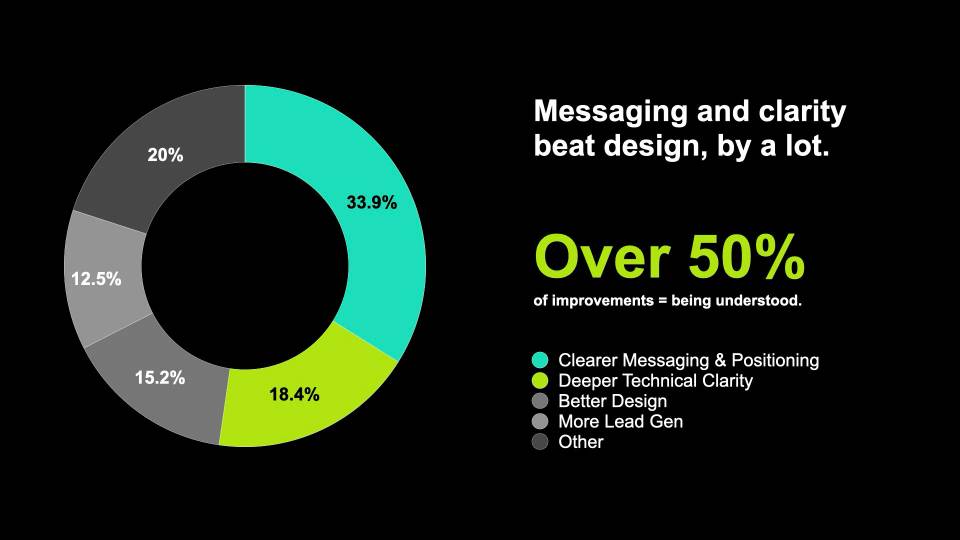
We asked: "If you could fix one thing about your website, what would it be?"
The top answer wasn't faster load times. It wasn't better visuals. It wasn't more features.
33.9% said clearer messaging and positioning.
Another 18.4% said deeper technical clarity.
That means over half of desired improvements come down to one thing: being understood.
Scientific companies often have incredible technology, but they bury it in jargon, abstractions, and insider language. The result? Prospects land on the site and think, "What do you actually do?"
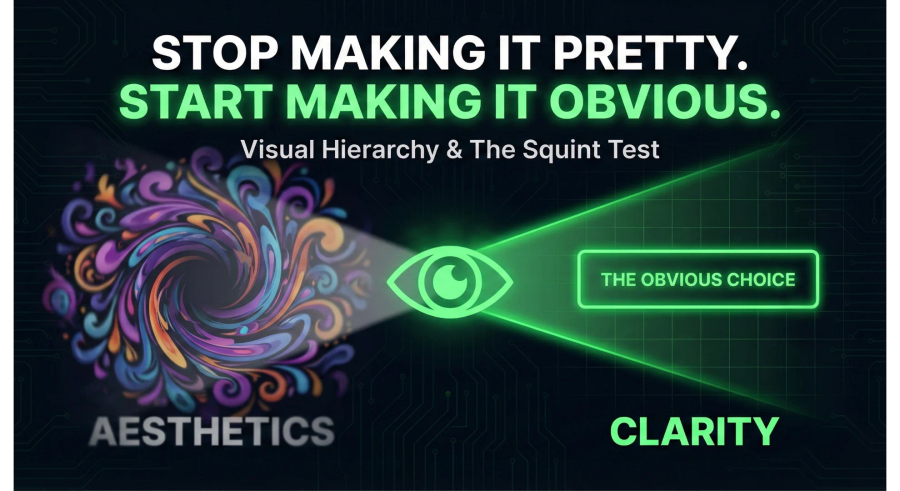
The fix isn't a redesign. It's a rethink. As we've written before, sometimes you need to stop making it pretty and start making it obvious.
The "Mostly Well" Trap
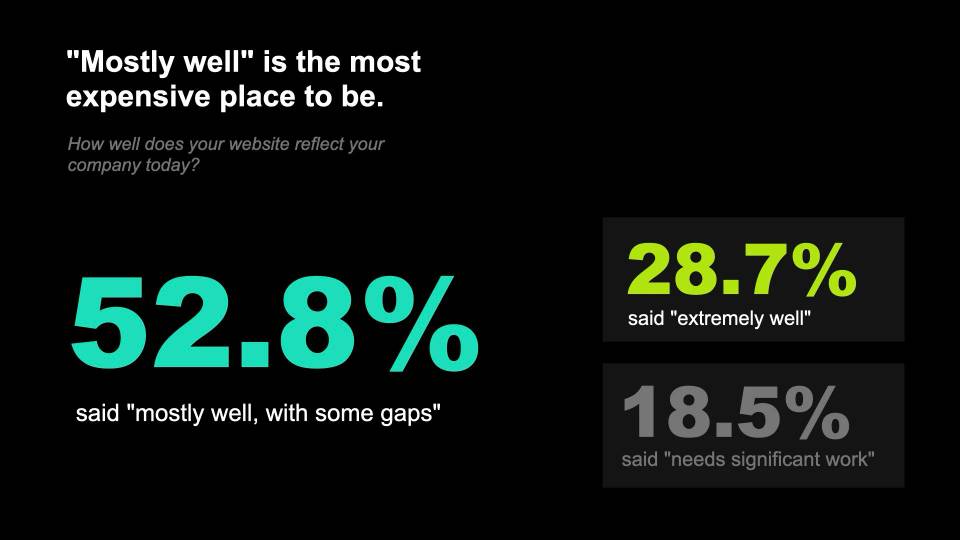
We also asked how well their website reflects who their company is today.
52.8% said "mostly well, with some gaps."
Only 28.7% said "extremely well."
This is what we call the "mostly well" trap—and it's the most expensive place to be.
"Mostly well" means the website isn't broken enough to prioritize, but it's not good enough to drive growth. It's easy to ignore. It's hard to justify fixing. And meanwhile, it quietly costs you deals you never even knew you lost.
If you're not sure what that looks like in practice, we broke down the hidden cost of an underperforming website in an earlier post.
Your Website Is in the Room Before You Are
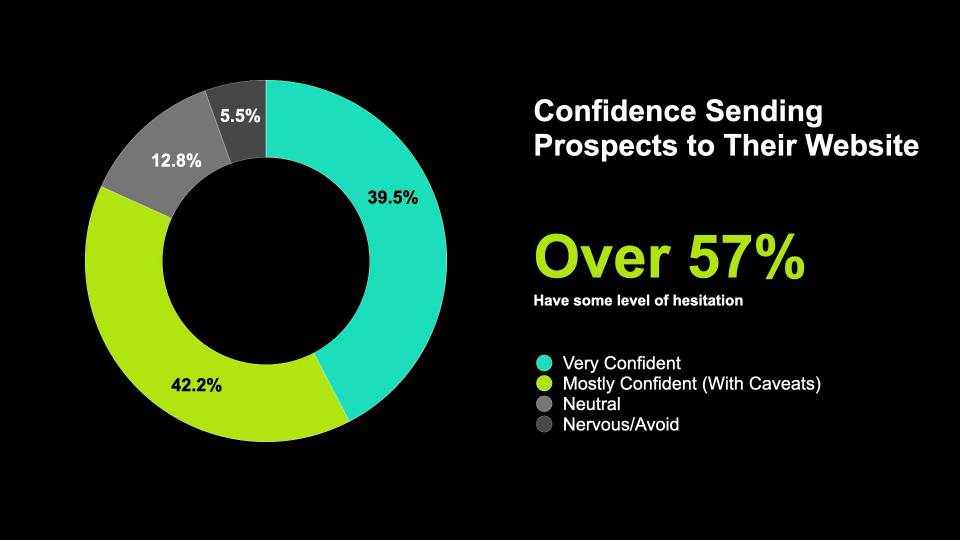
Perhaps the most telling finding: 57.8% of leaders have some level of hesitation when sending a prospect to their website.
- 39.5% are mostly confident, but with caveats
- 12.8% feel neutral—it doesn't hurt, but it doesn't help
- 5.5% are nervous about it or actively avoid sending people there
Think about what that means.
Your website is often the first impression a prospect gets. It's in the room before you are—shaping opinions while you're still prepping for the call.
And more than half of the leaders we surveyed aren't fully confident in what it's saying on their behalf.
This is why first impressions matter more than most companies realize. You don't always get a second chance to explain what you really meant.
What This Means for 2026
The data tells a clear story: scientific companies know their websites matter, but most don't trust them to perform.
The gap isn't about design. It's about clarity.
It's not about having a website. It's about having one that earns confidence—yours and your prospects'.
A few questions worth asking:
- If a prospect only saw your website, would they understand what you do and why it matters?
- Would you confidently send your best lead there right now?
- Does your site reflect who your company is today—or who you were two years ago?
If any of those gave you pause, you're not alone. More than half the leaders we surveyed feel the same way.
Close the Confidence Gap
We help scientific companies build websites they're proud to send prospects to—sites that communicate clearly, reflect who they are today, and actually help close deals.
If you're stuck in the "mostly well" trap, or worse, and want to talk through what it would take to fix it, reach out. We'd love to hear what you're working on.