Most agencies treat web design like a magic trick.
They collect your brand guidelines, your competitors, and your "inspiration." They disappear for weeks, maybe months. And then — ta-da — they present three polished concepts and ask you to pick one.
It sounds impressive. But here's what actually happens: you end up Frankensteining pieces from all three. "I like the header from Option A, but can we use the color from C? And something about B just felt more... us?"
Now nobody's happy. Not the designers. Not you. And definitely not the final product.
We do it differently. And our recent work with Helix Biostructures is a good example of what that looks like in practice.
Starting with exploration, not polish
When we kicked off with Helix, we knew a few things: they're a structural biology company, they loved beautiful imagery and wanted their site to show how creative they are, the name lends itself to a visual concept, and they needed a site that felt as sophisticated as the science they do.
A traditional agency might take that brief and disappear for a month, returning with three polished homepage concepts built around a helix motif.
We started with mood boards instead.
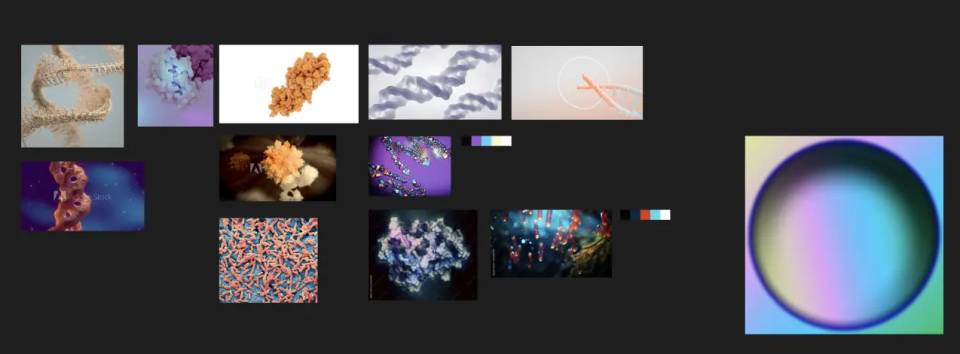
This is what early exploration actually looks like. Not three finished options — dozens of rough directions. Some leaned into the helix literally. Some abstracted it into pattern. Some didn't use a helix at all. We tested color palettes before committing to anything. We explored what "sophisticated science" could feel like visually.
None of this was polished. That was the point.
Getting feedback before you're "ready"
Here's where our process diverges from the big reveal approach: we showed this to the client before it was done.
We started with a bright pink color to pop and differentiate them from other biology companies.
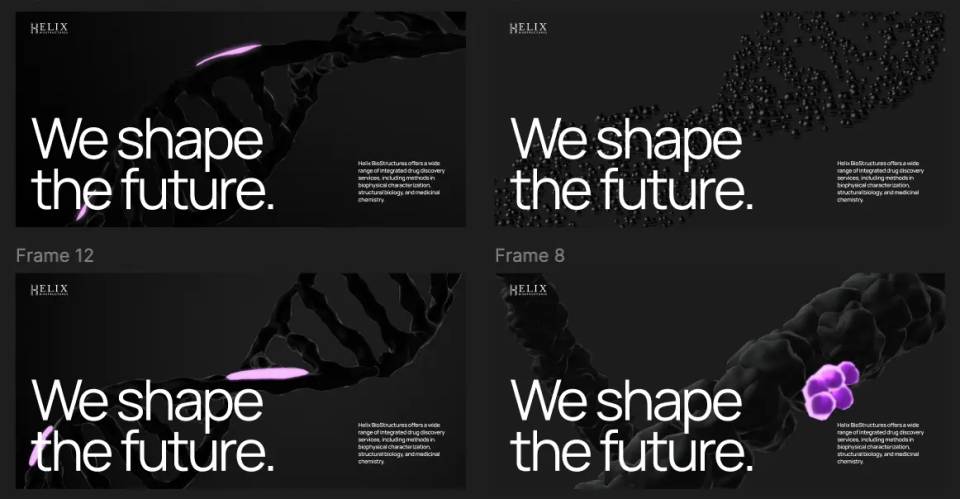
Their feedback? They weren't sold on the initial color direction. Some of the helix treatments felt too literal and could seem misleading to potential clients. They wanted something that felt more dynamic, more alive.
If we'd spent weeks polishing three concepts in that original color direction, we'd have wasted everyone's time. Instead, we course-corrected in a single conversation.
This is what iteration buys you: the freedom to be wrong early, when it's "cheaper" to fix.
From wireframes to "what if?"
As we moved into wireframes, the same principle applied. We didn't build one defined layout and present it as the answer. We explored.
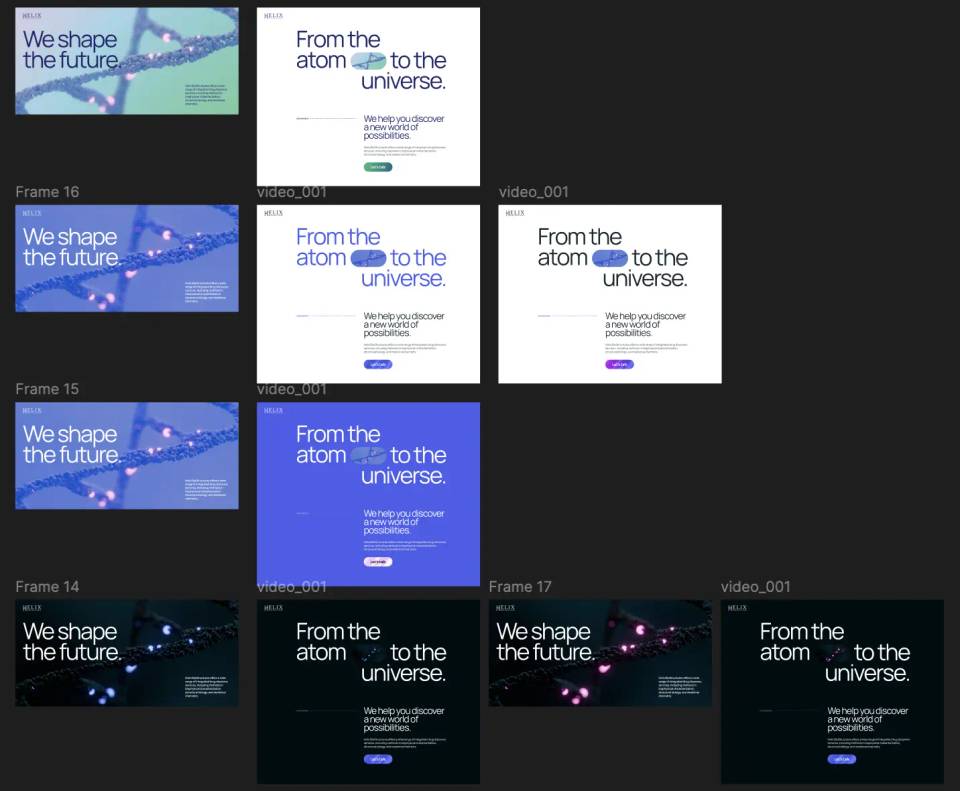
Different structures. Different hierarchies. Testing what happens when the helix is prominent versus when it's subtle. Asking "what if?" over and over again, with the client's input shaping each round.
Some of these didn't work. That's fine. We found out quickly and moved on.
Where iterative design wins
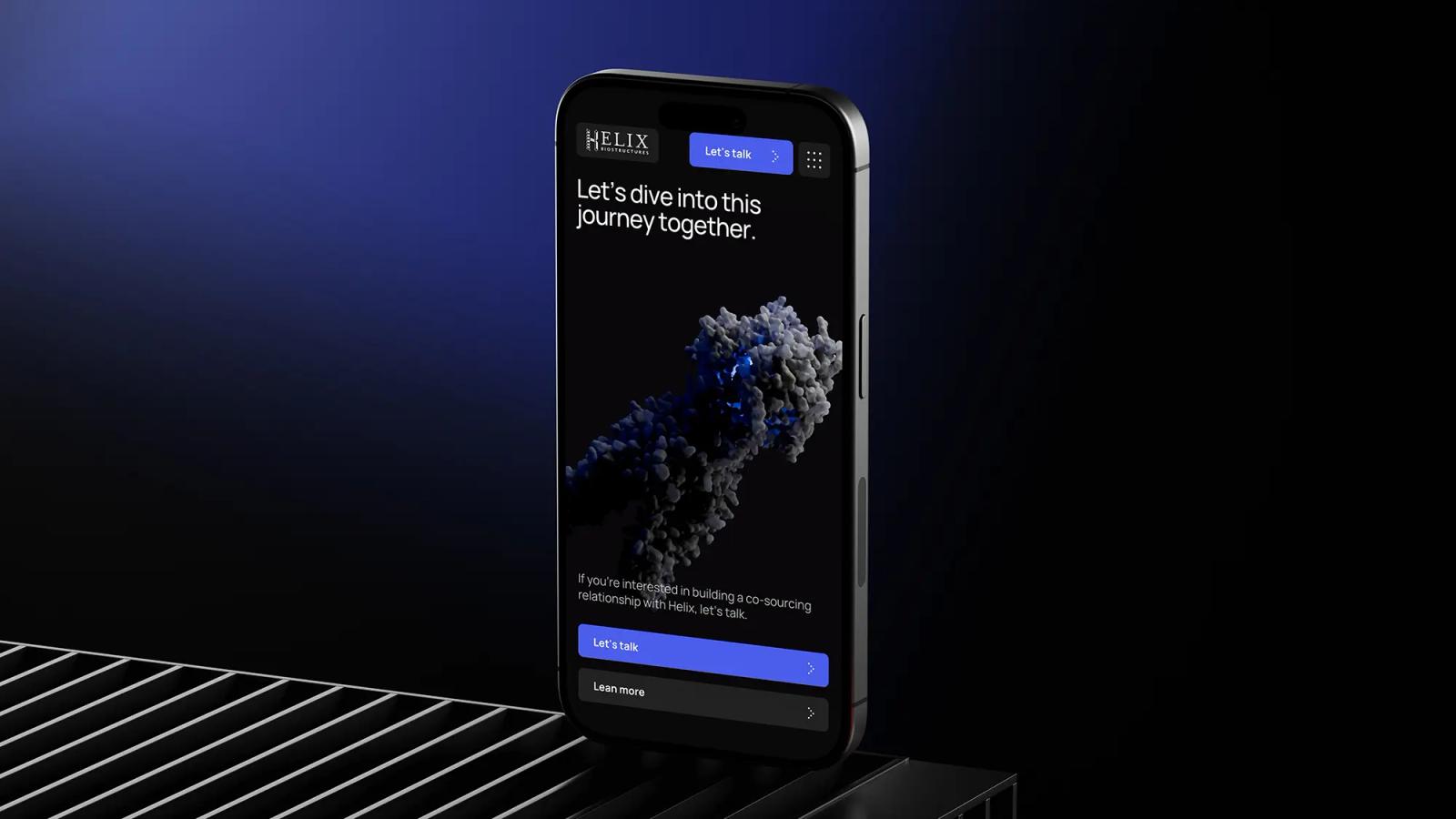
By the final design, the concept had evolved into something none of us would have arrived at alone: dynamic 3D molecular structures floating against a deep, dark backdrop, and a colorful, evolving helix motif to enhance the experience on the about page. It's bold, it's unmistakably scientific, and it feels alive — without being literal or expected.
They wanted their hero structure to be scientifically accurate, which actually allowed us to pull in a professional structural biologist and became a great collaboration.
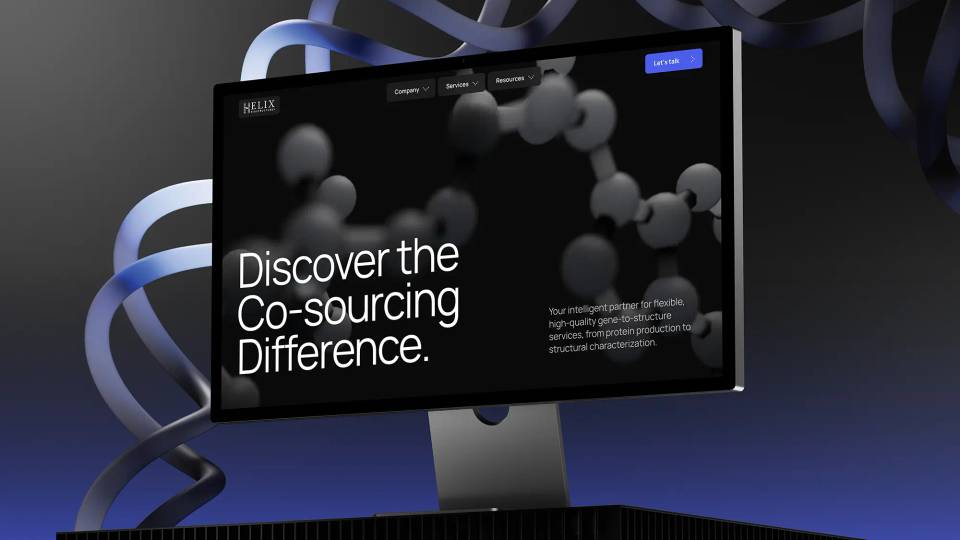
Every decision in that final design was shaped by real feedback. The dark palette, the dimensional molecules, the way the helix became an environmental element rather than just a logo treatment — none of that was in the first round. It emerged through iteration.
The client understood why it looked the way it did, because they were part of getting there. No surprises. No "well, you picked Option B."
Permission to iterate and why this matters
The traditional three-concept approach optimizes for the wrong moment. It puts all the pressure on a single presentation, hoping the client will love one of your directions enough to run with it.
But design isn't a magic trick. It's a conversation.
When you iterate in the open — when you show the messy middle, the color tests, the "what if we tried this?" wireframes — you build something together. And the work is better for it. More cohesive. More intentional.
We never want to show you anything you don't already expect to see based on the work we've done together. But that doesn't mean there aren't wow moments. It means the wow comes from refinement, not revelation.
We're not asking you to pick. We're asking you to build it with us.