
If you run marketing and you're deciding how to build or rebuild your site, you're getting pulled in two directions right now. Someone on your team says AI can do it in a fraction of the time and cost. Someone else says you need a real platform. Both of them are right, just about different projects.
This is how we sort it out. We build both ways, and by the end of this you'll have a straightforward test for figuring out which one fits the site you're about to commission.
Start with the moment that decides it. Your marketing manager wants to swap a photo on the homepage and make one button bigger. On a platform, that's a few clicks and it's live before lunch. On a site that was built by prompting an AI, it means opening a chat, describing the change, waiting for code to come back, reviewing it, and redeploying. Assuming somebody at your company is comfortable doing all of that.
That gap is the whole conversation, and almost nobody has it before they decide how to build.
One thing up front. We build on Webflow and have for years, so weigh what follows accordingly. But we also build with AI, including sites we've shipped for clients, which is why we can tell you where each one stops working.
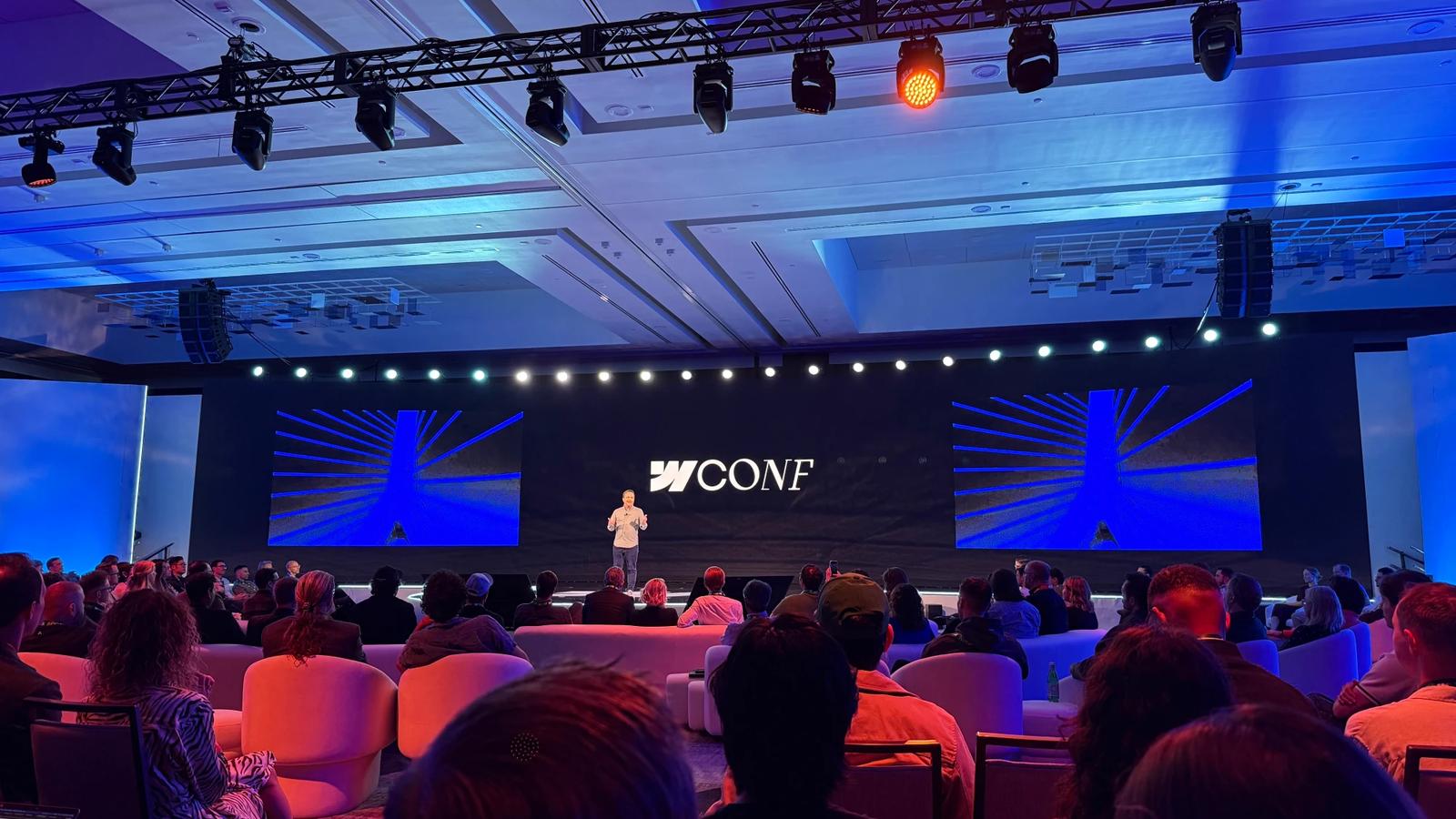
One more piece of timing. I'm writing this a few weeks out from Webflow Conf '26 in Boston, and Webflow has been teasing a new direction. They've already been moving this way, with App Gen and the AI Assistant coming out of last year's conference, so it's fair to expect the line between "build it with AI" and "build it on a platform" to keep moving. Some of what follows may look different by October. This is where my thinking sits today, and I'd rather tell you that than pretend the ground isn't shifting.
What AI actually changed
It's real, and it's not small. A few years ago, shipping a working product meant hiring a team. Someone on the front end, someone on the back end, someone who understood auth, someone who could wire up the APIs and keep them from falling over. Now one or two people with a clear idea and an LLM can put the same thing in front of users.
For a marketing leader, that shows up in specific ways. The internal tool your ops team has wanted for two years is suddenly a two-week project instead of a budget line you keep deferring. The campaign microsite nobody had capacity for gets built. The thing you would have paid an agency twenty grand for is something your one technical person can stand up.
We use it both ways here. Internally, we ship our own tools with AI, using Xano for the database and Vercel for the front end, so we can test ideas as a company instead of arguing about them. And we've built a handful of smaller client sites this way too, mostly landing pages and focused single-purpose sites that aren't going to change much after launch. For that kind of project it's a good fit and we'll keep doing it.
Two things worth being honest about, though.
The first is that it's still real work. Getting an AI-built site to actually function properly, and to not immediately read as AI-built, takes a lot of hands-on attention. The generated version gets you maybe most of the way there, and then someone has to close the distance on the design, the details, and the parts that quietly don't work. Fast is not the same as free.
The second is who's doing that work. We have technical people on those builds. We're skipping the platform, but we're not skipping the person who understands what's being shipped. AI made them faster. It didn't replace them.
The part that shows up later
Here's what the demo never shows you.
Six months after launch, the person who built the thing is gone. Maybe they left the company, maybe they were a contractor, maybe they just moved to a different project. Now marketing wants to add a section to the pricing page, and the answer is that nobody left can safely touch it. You're not looking at a bug. You're looking at a site your team is locked out of.
If you've been in marketing for a while, you've already lived some version of this. AI didn't invent the problem. It just made it a lot easier to create, because the thing that produces a codebase nobody can maintain is now a weekend and a subscription instead of a six-figure engagement.
The Northeast Power Coordinating Council came to us stuck in exactly this. NPCC handles reliability for the bulk power system across Northeastern North America, and most of what they publish is documentation their members actually have to follow. Standards, regional criteria, compliance worksheets, self-certification forms, all of it versioned and dated and constantly being superseded.
All of that lived in a custom-built content management system bolted onto WordPress that nobody was maintaining anymore. Whoever wrote it was long gone. The content wasn't really structured, it was just stored, so there was no clean way to pull it out and move it anywhere. For an organization whose members need the current version of a document and not a copy from three years ago, that's not an inconvenience. That's the whole job getting harder every month.
Getting them out took a large Python migration to organize the data and push it into Webflow's API, over a thousand items into a real CMS. AI helped write it. This was back in the GPT-4o days, well before the coding tools we have now, and it still cut the work down significantly.
So AI didn't cause that mess. It's what got them out of it. But look at where they landed. The thing keeping them out of that hole isn't the migration script, it's the platform on the other end, where their team can publish a new directory without calling anyone.
And this is where "but I didn't write any code" stops helping. Plenty of AI tools build visually now. You describe a page, you nudge the layout, you never see a line of anything. That's real, and it's impressive. But it still produced a codebase, and that codebase is what your team inherits. It doesn't matter whether a developer typed it or a model generated it from a description. When something needs to change, someone has to be able to open it up and know what they're looking at.
That's the question worth asking. Not whether you can build it, but whether anyone can own it after it's built. Maybe there's a day where the answer stops mattering because you really can hand the whole thing off and walk away. We're not there yet, at least not as I'm writing this.
Why platforms still win the work that matters
This is where Webflow and Shopify keep proving themselves. What they really did was solve the edge cases. Server-side rendering, so you don't quietly tank your search traffic. A CMS your team can log into and actually run. All the quiet complexity underneath a serious site that you'd otherwise be paying someone to rebuild and then maintain forever.
They also did something less technical and more important. They made an interface a non-engineer can work in. Your marketing team is never going to live inside a code editor, and they shouldn't have to. The value isn't that the platform is easier to build on. It's that the site stays editable by the people who need to edit it, long after the person who built it has moved on.
Shopify does the same job for selling. Every messy part of e-commerce, the tax handling, the checkout, the inventory, the fraud, is already built and proven by thousands of stores. Building that yourself means owning all of it.
We use both together on plenty of projects. Webflow gives us a genuinely custom design and user experience, and Shopify runs headless behind it handling the products and the transactions. Neither one required us to invent anything that already existed.
The actual test
When someone asks us how to decide, it comes down to five questions.
Who updates this in six months? If the answer is a marketer, use a platform. If the answer is an engineer who will still be here, AI is on the table.
If it broke, who fixes it? Not who built it. Who fixes it at 4pm on a Thursday when a form stops submitting. If that person doesn't exist on your team or on retainer, a platform isn't a preference, it's a requirement.
Are you selling? Use Shopify. There is no version of this where building your own checkout is the smart move.
How often does the content change? Weekly means you need a real CMS and a real editor. Twice a year means you have more freedom.
How many people touch this? A landing page one person owns is a different animal than a site where content, design, and campaigns all move at once. The more hands on it, the more you need a platform built for hands.
The pattern is pretty consistent. Smaller sites that won't evolve much after launch are a good place for AI, and we build them that way. Larger sites, enterprise marketing, anything with a real team and ongoing needs behind it, that's where Webflow is the clear answer and it isn't close.
Where we land
AI changed what a small team can build, and we use it every week. It ships our internal tools, it's built client landing pages for us, and it's what pulled a thousand documents out of a system nobody could maintain. That's not a grudging admission. It's a real advantage and you should use it where it fits.
But building something is the short part. The long part is living with it. Webflow handles complex builds, custom design, and content operations a marketing team can actually run, and it does that for years without anyone needing to open a codebase. Shopify does the same for selling. That's not a compromise you accept to keep things simple. It's the reason the work holds up after the launch photos are taken.
So if the site is small, focused, and unlikely to change much, AI is a legitimate way to build it. If it's the site your company runs on, with a team behind it and needs that keep coming, build it on a platform. The question was never which one is better. It's which one you'll still be glad about in two years.