David's Desk
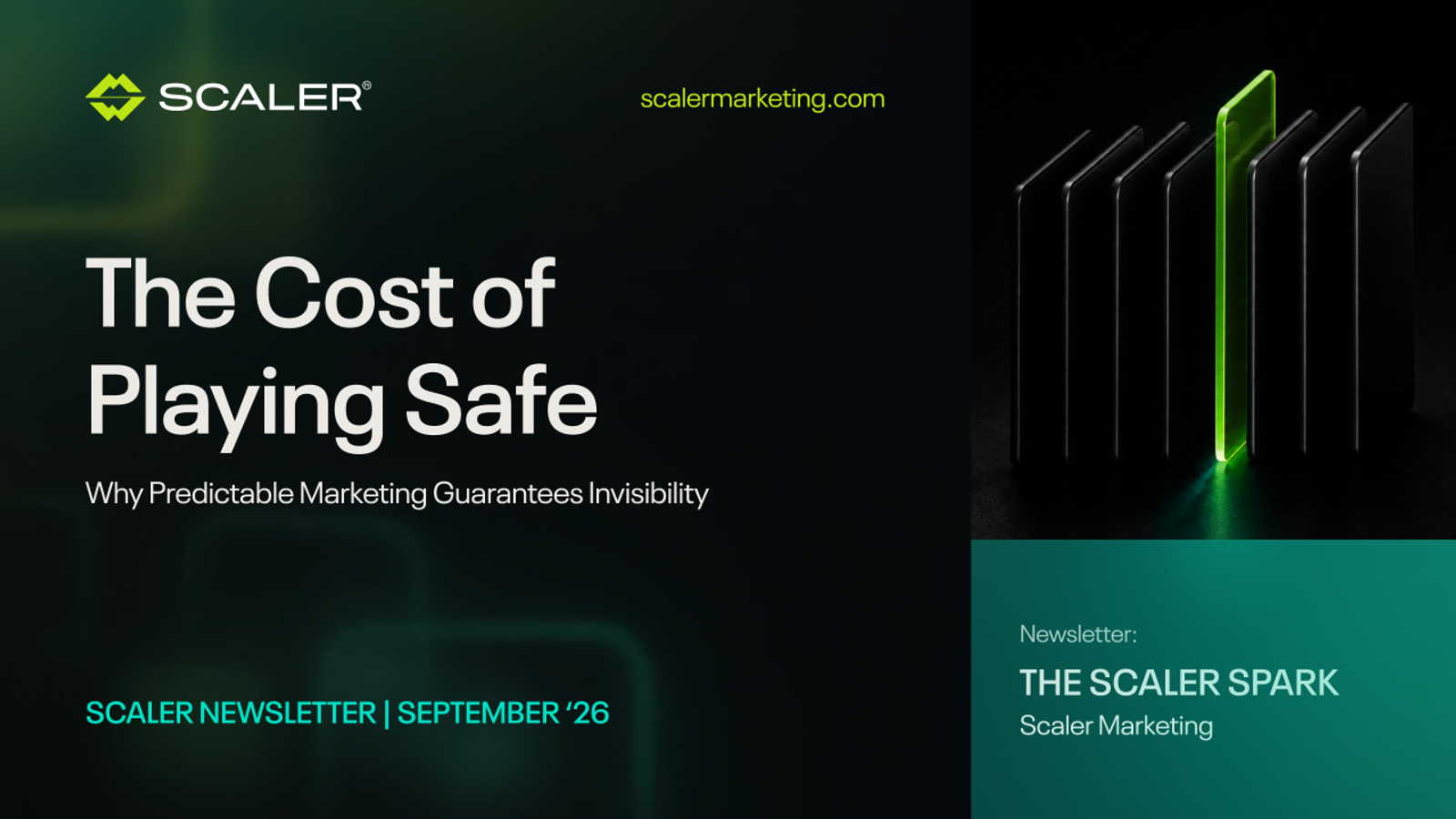
"Professional" has quietly come to mean "identical."
Same stock photos. Same safe navy-and-white layout. Same four buzzwords every competitor in your space is currently slapping on their homepage: those being“better, faster, cheaper, smarter”(Sound familiar?)
Nobody sets out to build invisible marketing. It's just what's left after five rounds of internal edits sand off anything that might get pushback. The result is safe, on-brand, and completely forgettable. And forgettable doesn't show up in your inbox as a complaint, it shows up as a pipeline that never grows.
Smart teams more often than not default to safety for one of two reasons. It’s either because it protects them from criticism, they don’t want to be the ones to come up with the big idea that flops, or they are so caught up in the day-to-day Marketing Grind of stakeholder meetings, analysis reports, pushing buttons and checking boxes, that they never actually set aside time to focus on new and creative ideas.
But in B2B, the biggest risk isn't offending someone; it's being so uninspired that nobody cares or remembers you exist.
Standing out isn't about being loud or weird. It's about having the conviction to frame your perspective so clearly that the safe alternative looks outdated.
Science of Insight: What playing it safe actually costs
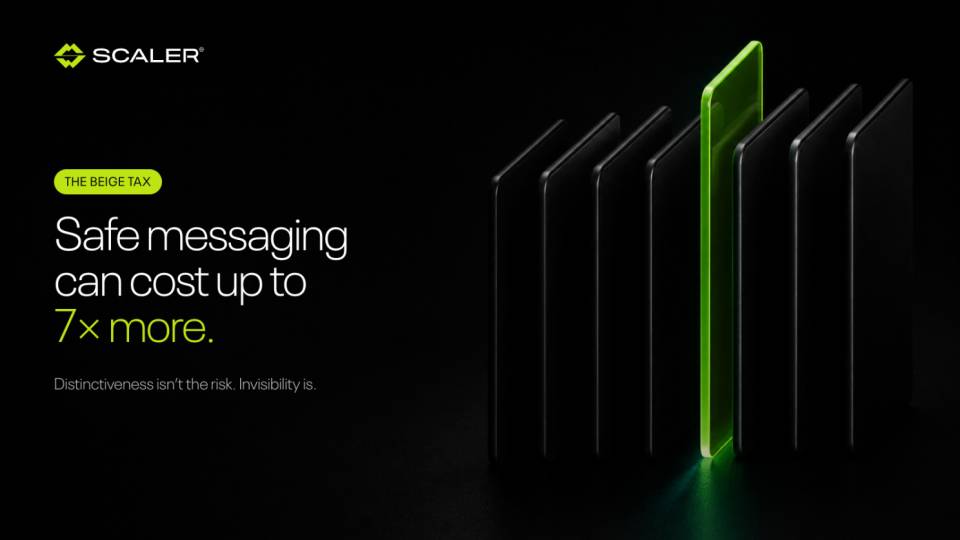
Playing it safe doesn't just stifle growth, it actively costs more in the long run.
I just finished the book Snow Leopard, and the core point is clear: almost everyone crowds into obvious solutions to obvious problems while playing the more-content-for-the-sake-of-more-content game. Brands default to safe, utility-driven messaging because tactical grunt work feels measurable and productive, but it ultimately just generates more background noise.
When your messaging sounds like every other vendor in your category, you pay for it directly. According to research from LinkedIn’s B2B Institute (published in Marketing Week), a shocking 77% of B2B ads score just 1 out of 5 stars for creative effectiveness, generating zero long-term growth.
Their findings also showed that brands relying on safe, timid messaging end up paying up to 7x more in ad spend just to achieve the same reach and recall as brands that take distinct creative risks.
That’s the real cost of the"beige tax": when your marketing is invisible, you have to buy seven times the ad repetition just to get a single person to pay attention, and even when they do, they are much less likely to care. Taking a distinct stance isn't a gamble, it's your biggest unfair advantage.
Guest Voice: Mary Keough

Mary Keough is the former Director of Product Marketing, Content and Demand Gen at CoLab and now provides fractional demand gen for B2B companies with DemandLoops. She writes weekly on market strategy and positioning, and she knows what it actually takes to step out of corporate safety and build creative that gets remembered.
We asked her about taking big risks when the industry tells you to play it safe.
When building creative for a past client, she skipped the standard B2B playbook entirely and launched an unpolished comic series using 90s WordArt visuals. It was unconventional, counterintuitive, and instantly broke through the noise.
"[It was] SO much fun and it worked," Mary shares. "It was really fulfilling to have a counterculture POV on creative, be given the freedom to execute, and then watch it work."
For Mary, taking creative leaps isn't about being wild for the sake of it, it's about having the patience and conviction to hold a real point of view and let it play out.
"Did you build enough or wait long enough to test the hypothesis?" she asks. "If there's even a small inkling that you haven't waited long enough, don't stop. My God, we have to stand for something! It's just marketing after all ;)"
Safety might feel comfortable, but as Mary points out, real momentum only happens when you're willing to take a definitive stand.
Team Spotlight: Josiah, Senior Technical Developer

Josiah, Senior Technical Developer at Scaler, brings a sharp perspective from the build side: chasing trendiness is often just a disguised way to play it safe.
"I often see new trends and old tools as their own version of playing it safe... because they can be an easy excuse to delay other decisions or simply learn to push workflows to their fullest capabilities," Josiah notes.
That technical conviction was put to the test on Sprouts, a daily word-puzzle platform designed to engage users with tight, responsive gameplay.
The standard agency playbook for an interactive web game would be to build a heavy custom React application. It's the safe, conventional route developers default to, but it often brings bloated code, longer timelines, and unnecessary friction.
Instead, Josiah questioned the standard approach and chose to push a modular stack, building the entire game seamlessly using Webflow, Wized, and Xano. The result was a lightweight, lightning-fast user experience delivered in a fraction of the time.
"I do heavily believe the best tool is the one you're able to push to its limits and get the most out of," Josiah says. "As a Sr. Technical Developer at Scaler Marketing, I don't just take orders and write code, I question the strategy behind the build."
Client Spotlight: Putnam Leasing
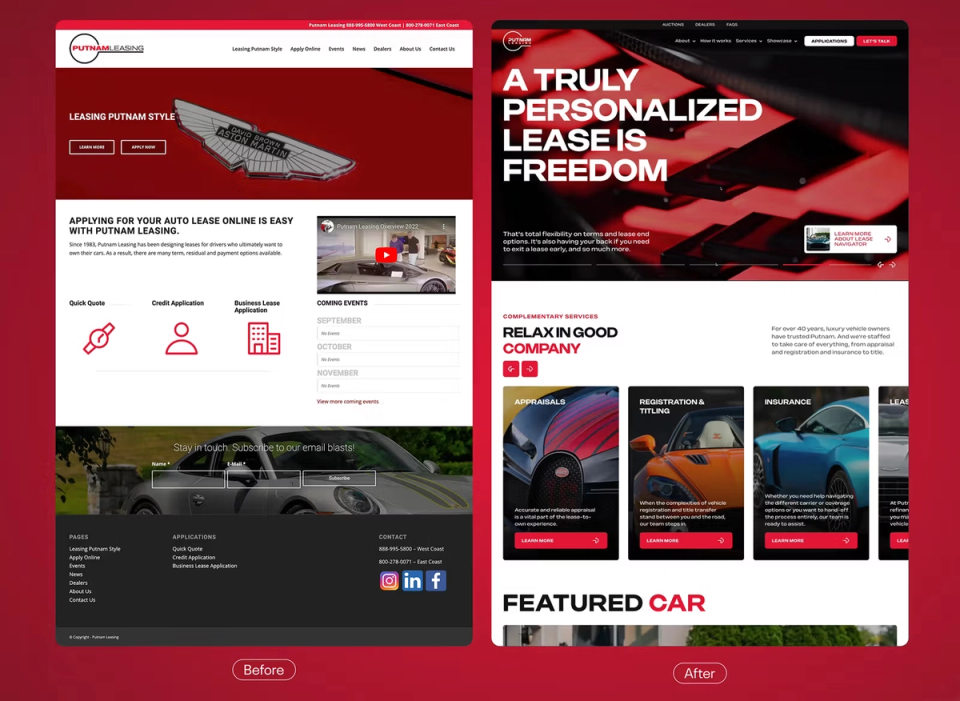
Putnam helps make luxury car ownership more accessible through its Lease Navigator™ program, guiding clients from "dream" to "driveway" with a white-glove, customized experience.
Their old site was complex, boring, and outdated. It didn't match the brand or the high-octane feeling of driving a dream car, failing to speak to a younger, tech-savvy audience while maintaining the trust expected from a high-end finance company.
What we did was take an archaic, outdated finance process and make it modern, interactive, and easy to use. Instead of building a complex, intimidating application form, we took that complicated flow and turned it into an intuitive, guided visual journey that makes applying feel seamless and engaging.
On top of that new digital platform, we brought the entire brand to life with fresh logo animation, bold red and black styling, and clean luxury visuals.
Putnam refused to play it safe in an industry dominated by boring corporate templates. That's exactly why they are winning.
The Move
While safe marketing might feel like the low-risk choice, invisibility is the most expensive thing your business can buy.
This week, take an honest look at where you and your team spend the bulk of your time. Are you buried in tactical grunt work because it feels safe, measurable, and defensible? And when you do get the chance to think creatively, how much of that original vision gets watered down by fear or corporate oversight before it ever sees the light of day?
If you're ready to stop blending in and start building marketing with a real point of view, book a call with David today.