AI can help designers create consistent brand assets by making it easier to build custom tools around a shared visual idea. Those tools give designers more room to experiment and can remain useful to a team long after the initial project.
One of the most exciting uses of AI in my design work has been building small tools around a specific creative idea.
A brand project often needs a whole family of visual assets: illustrations, patterns, textures, and compositions that feel connected while serving different purposes. Developing that range takes time, especially when each variation needs to be constructed by hand.
AI makes it more accessible to build custom software for that work. A designer can take an idea for how a visual system should behave, turn it into a working tool, and use it to explore possibilities through adjustable parameters.
That adds another dimension to the creative process. Alongside designing individual assets, we can design ways to generate and refine them.
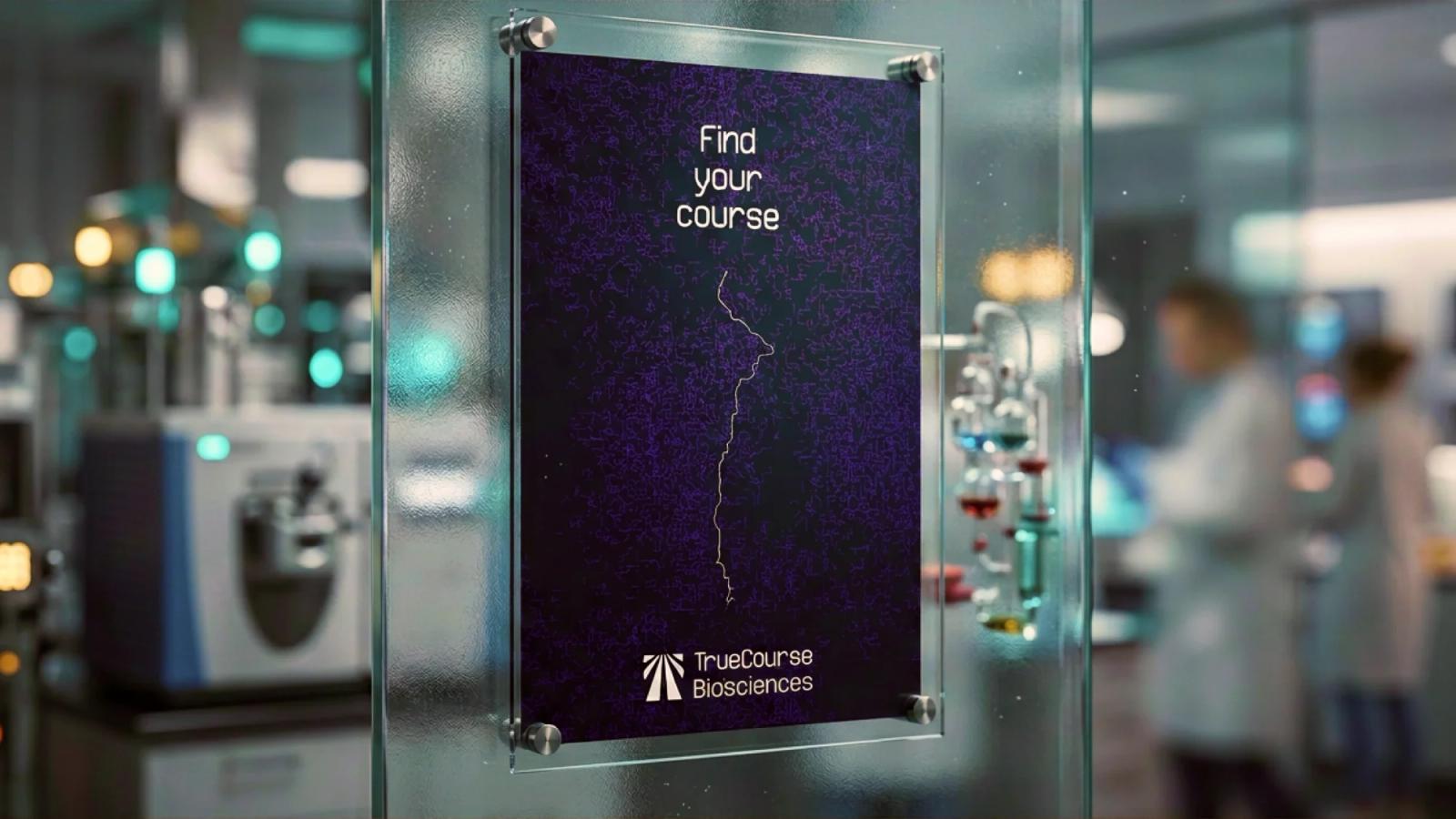
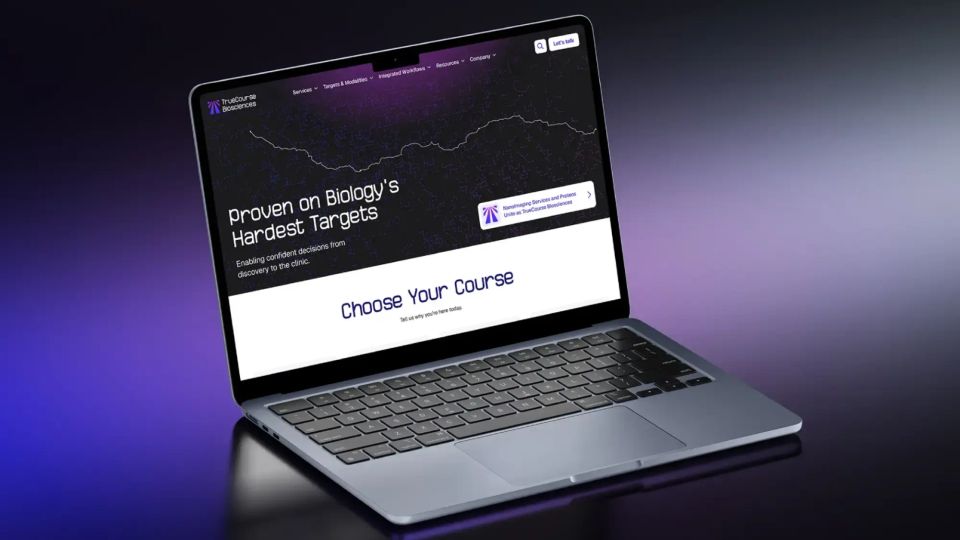
I recently explored this approach while developing the visual identity and website for TrueCourse. The project gave me a practical way to test what a tool built around a brand concept could make possible.
Start with an idea worth expanding
The value of a custom tool begins with the visual idea it supports. What should remain recognizable across different compositions? What can change? How does that variation connect to the story the brand is telling?
For TrueCourse, that starting point came from the strategy. Scott, our team’s strategist, had developed the positioning, naming, and tone of voice before I began translating that foundation into a visual identity.
The company brings together the expertise of NanoImaging Services and Proteos to help researchers navigate complex drug discovery work. The name suggested direction: finding a clear path through uncertainty.
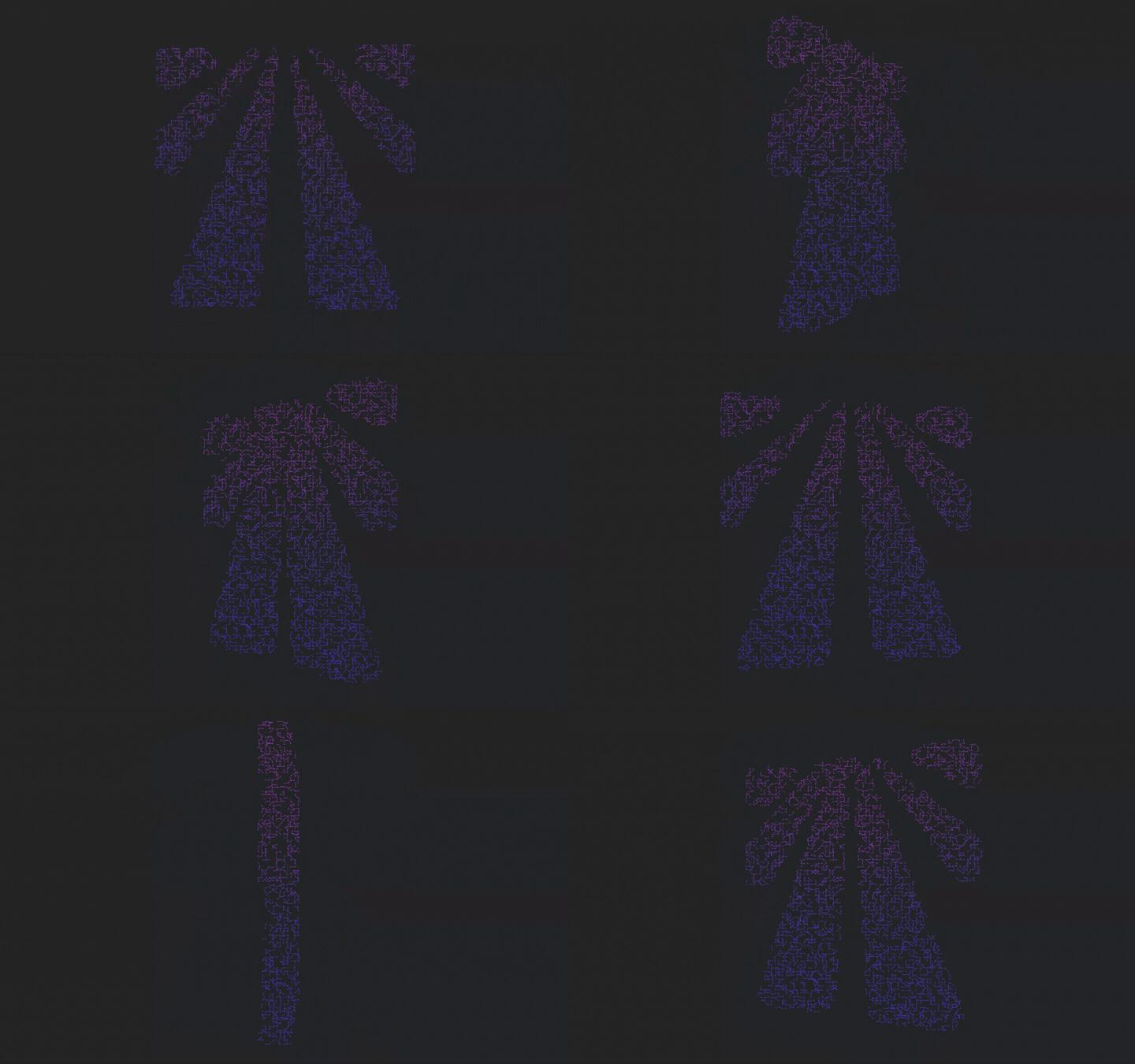
I developed a visual concept around complex networks of paths and connections, with a distinct route running through them. It expressed the guidance TrueCourse offers its clients.
That gave the illustrations a shared logic. Each composition could be different while carrying the same underlying idea.
Creating those networks manually could have meant spending hours on individual illustrations. The website needed multiple compositions, so I wanted a more flexible way to produce and explore them.
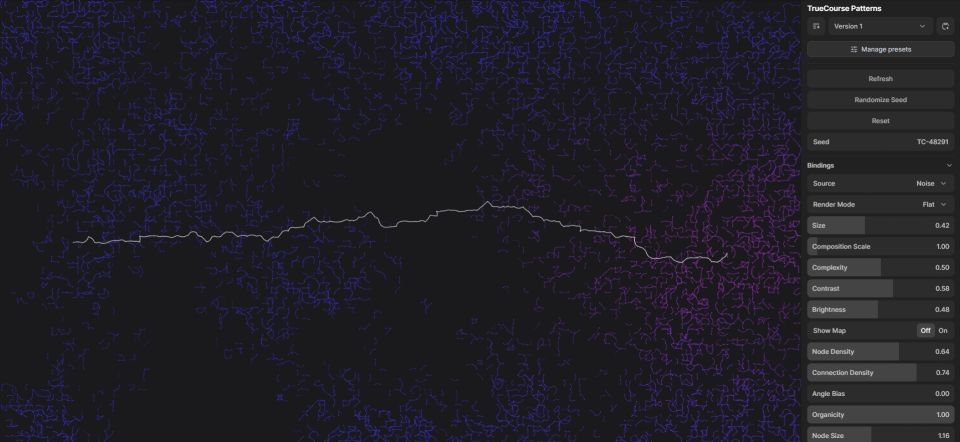
Using Codex, I built a procedural tool that generates variations through adjustable parameters. Changing those variables produces new forms and compositions within the visual language I had established.
In this workflow, AI helped me develop the software. The assets come from the procedural system and the choices made through its controls.
Once the tool was working, I could explore variations in seconds or minutes, compare the results, and refine the compositions that worked best for the site.
The useful part was being able to stay with an idea and explore it more thoroughly. When every variation takes hours, you have to be selective about what you test. Making those iterations quicker gives you more room to experiment.
The same approach could support a pattern generator, a texture tool, or a system for exploring graphic variations. Its form should follow the needs of the identity. For TrueCourse, paths and connections were the material we needed to work with.
Creative direction becomes part of the tool
Building a generator introduces another set of design decisions. You have to think about the range of outcomes it should produce, the controls that are useful, and the qualities that make a result belong to the brand.
Those decisions shape the space people can explore.A tool can produce many options, but someone still needs to judge the composition, its relationship to the content, and whether it expresses the intended idea. The speed of generation makes that judgment more consequential: there is more material to choose from.
For me, this is where the creative opportunity lies. I can bring my understanding of the brand into the behavior of a tool, then use what it produces to keep developing the visual work.
The result is a closer relationship between concept, experimentation, and production.
Give the brand a way to keep creating
The value can also extend beyond the design process.
The TrueCourse tool helped us create illustrations for the website, and it remained available to the company for future use. The team has a way to explore additional assets from the same visual concept when they need them.
That possibility changes how I think about a branding handover. Guidelines explain the visual language. Assets show it in use. A custom tool can let people work with it directly.
AI makes custom tools like this easier to build. Getting from a prompt to a tool a team can use still takes a clear brand strategy, a strong visual direction, and enough experience with the technology to know what’s possible and what needs testing and refinement.
For TrueCourse, that meant translating the idea of finding a clear path through complexity into rules for how the illustrations could vary. The team can now create new assets on its own because those decisions are already built into the tool.
Alongside the assets and guidelines, we can give a brand the means to keep creating.The identity we deliver becomes a starting point for what comes next.